
Rigetti Secures $8.4M Order for 108-Qubit Quantum Computer with C-DAC

Rigetti Computing India secured an $8.4 million order to deliver a 108-qubit quantum computer to C-DAC, India’s R&D organization. The system, utilizing Rigetti’s chiplet-based architecture, will be installed at C-DAC’s Bengaluru center and deployed in the second half of 2026. This order highlights growing demand for on-premises quantum computers and Rigetti’s leadership in the field.
Rigetti Secures $8.4 Million Order for 108-Qubit Quantum Computer
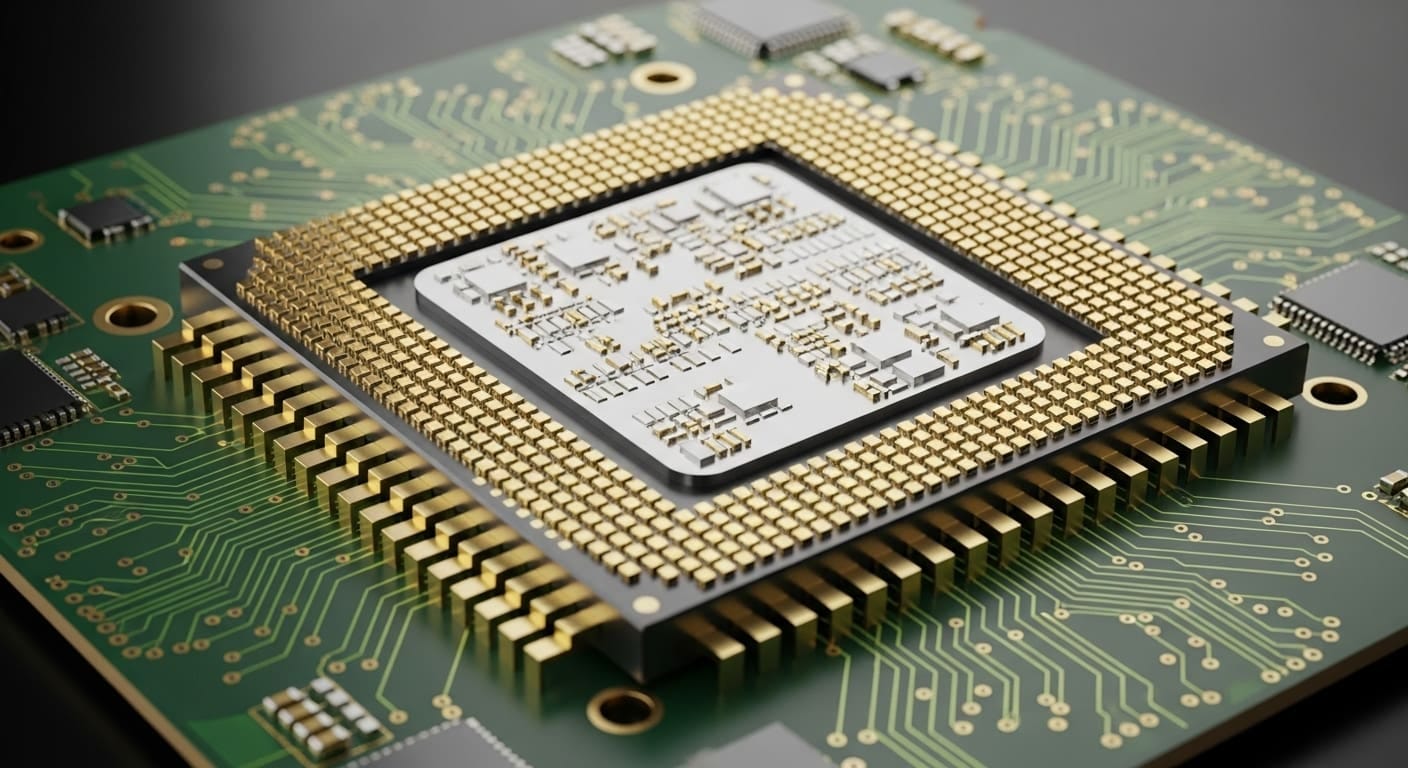
Rigetti’s chiplet-based architecture is central to this $8.4 million order, providing a scalable foundation for building systems with increasingly high qubit counts. This technology enabled the deployment of an industry-first multi-chip quantum computer in 2025—Cepheus-1-36Q—constructed from four interconnected 9-qubit chiplets. The 108-qubit system ordered by C-DAC will utilize this same approach, designed to support the advanced error correction and fault-tolerant computing needed for complex calculations. This delivery to C-DAC, India’s R&D organization, is planned for the second half of 2026 and will be integrated into their supercomputing data center.
Rigetti’s quantum computers, based on superconducting qubits, achieve gate speeds of 50-70ns—approximately 1,000 times faster than technologies like ion traps. The company manufactures these chips in-house at Fab-1, a dedicated facility for quantum device production, supporting a range of system sizes from 9 to 180 qubits.
Chiplet-Based Architecture Enables Scalable Quantum Systems
By connecting multiple smaller chips, Rigetti aims to overcome limitations in building single, large quantum processors. The company manufactures these chiplets in-house at Fab-1, an integrated facility dedicated to quantum device manufacturing. Rigetti’s current systems, like the Cepheus series up to 108 qubits, leverage this proprietary chiplet technology alongside integrated control electronics. This vertically integrated approach supports the creation of on-premises quantum computers, as exemplified by the 108-qubit system planned for C-DAC, designed to advance hybrid classical-quantum supercomputing.
Rigetti’s Superconducting Qubits Achieve Fast Gate Speeds
Rigetti’s superconducting qubits are notable for their speed, currently operating at gate speeds of 50-70 nanoseconds. This performance is significantly faster—approximately 1,000 times faster—than alternative qubit modalities like ion traps and neutral atoms. Such rapid gate speeds are crucial for complex quantum computations, enabling more operations within a given timeframe and improving the potential for tackling challenging problems. The company’s advancements include the development of the industry’s first multi-chip quantum processor, demonstrated in 2025 with the Cepheus-1-36Q system. This system utilizes four 9-qubit chiplets tiled together, paving the way for scaling to higher qubit counts necessary for error correction and fault-tolerant computing.
C-DAC Advances Hybrid HPC-Quantum Mission with Rigetti
C-DAC’s advancement of its Hybrid HPC-Quantum Mission includes an $8.4 million purchase order for a 108-qubit quantum computer from Rigetti. This system will be integrated directly into C-DAC’s Bengaluru supercomputing data center, supporting research and development for a network of scientific and industrial partners. This collaboration builds on a prior memorandum of understanding between Rigetti and C-DAC focused on co-developing quantum systems. C-DAC is also pursuing related quantum projects like quantum accelerators and a national quantum computing reference facility, expanding its technological capabilities. The mission focuses on applying hybrid HPC-Quantum solutions to areas of national importance, leveraging Rigetti’s chiplet-based architecture for scalable quantum computing.
Fantastic to see Rigetti's chiplet approach gaining real-world traction outside just lab demos. The 1000x speed advantage over ion traps is kinda insane when you think about time-to-solution for actual workloads. I remmeber working with an early quantum testbed a few years back and the coherence-speed tradeoff was brutal, so this Ceph eus architecture solving both at scale is noteworthy. Curious how C-DAC will partition resources between classical HPC jobs and quantum tasks tho.
This feels like something universities and hedge funds would charge 10x for.
A complete quantum computing + monetary system breakdown in one premium series.
One-time $2,499 is honestly a strategic investment.
“It’s priced for serious professionals, not casual scrolling — that’s why it stands out.”
“Are you preparing for the quantum era… or waiting until it becomes mainstream?”