
QuanUML: A Unified Language for Modelling Quantum Software Systems

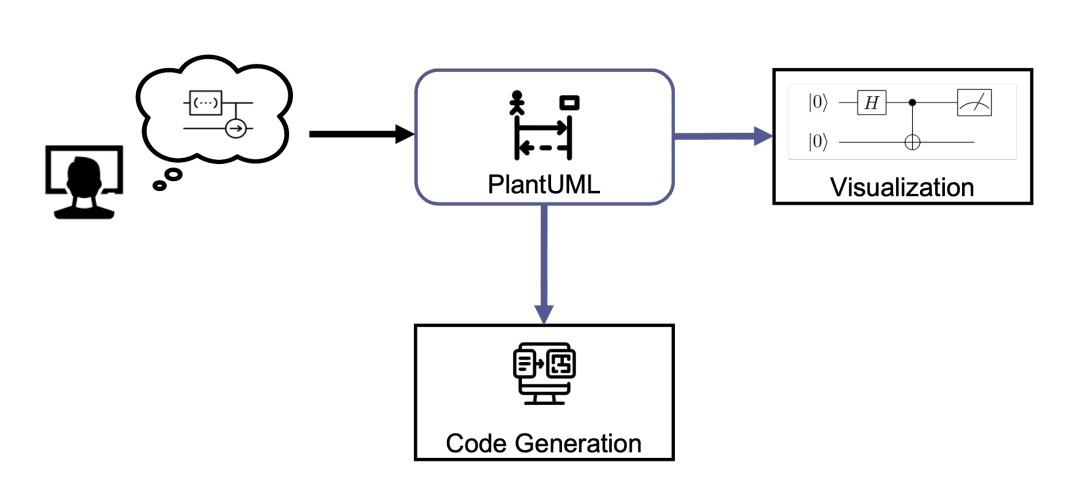
QuanUML, a Unified Modeling Language extension, facilitates the modelling of quantum and hybrid quantum-classical systems by incorporating constructs like qubits and quantum gates. Application to dynamic circuit design demonstrates its utility in visualising and developing quantum software, offering a structured framework beyond current methods.
The development of robust software engineering practices lags behind the rapid advances in quantum computing hardware. To address this, researchers are exploring methods to apply established software design principles to the unique challenges posed by quantum systems. A team led by Xiaoyu Guo and Jianjun Zhao of Kyushu University, alongside Shinobu Saito from NTT Computer and Data Science Laboratories, present a novel approach in their paper, ‘QuanUML: Towards A Modeling Language for Model-Driven Quantum Software Development’. They introduce QuanUML, an extension of the widely used Unified Modelling Language (UML) – a standardised visual design tool – incorporating quantum-specific elements like qubits (the basic unit of quantum information) and quantum gates (operations performed on qubits). The team demonstrate QuanUML’s application to the design of efficient long-range entanglement, a crucial resource for quantum communication and computation, offering a structured framework for the development of complex quantum algorithms and systems.
QuanUML: A Modeling Language for Quantum Software
This research introduces QuanUML, a modeling language designed to improve the development of quantum software. Built upon the established foundations of the Unified Modeling Language (UML), QuanUML addresses the need for higher-level abstraction in quantum programming, enabling developers to design and visualise complex quantum algorithms with greater ease and efficiency. By integrating quantum-specific elements – such as qubits, quantum gates, and representations of superposition and entanglement – into the familiar UML framework, QuanUML aims to lower the barrier to entry for developers and foster collaboration within the quantum computing community.
QuanUML extends the principles of UML to facilitate the design and visualisation of quantum software, offering a tool for tackling the challenges of quantum programming. The language incorporates quantum-specific constructs directly into the UML framework, enabling the modelling of both fully quantum and hybrid classical-quantum systems.
Central to QuanUML’s design is the leveraging of existing UML tools and methodologies, ensuring seamless integration into existing software development workflows and minimising the learning curve for developers familiar with UML. Standard UML diagrams, such as sequence diagrams, are used to visualise the flow of quantum algorithms, enhancing understanding and facilitating communication.
The core benefit of QuanUML lies in its support for model-driven development, allowing developers to create high-level models that capture the essence of quantum algorithms without focusing on low-level implementation details. By enabling model creation, the language streamlines the quantum software design process and facilitates automated code generation, contrasting with current methods that require developers to work directly with quantum assembly languages or low-level frameworks. The resulting models offer a structured and understandable representation of quantum algorithms, enhancing collaboration and reducing errors.
QuanUML’s modelling capabilities extend to the visualisation of quantum phenomena such as superposition and entanglement through adapted UML diagrams, providing a crucial advantage in a field where intuition can be difficult to develop. This visual clarity aids algorithm comprehension and debugging, crucial aspects of quantum software development given the inherent challenges of quantum mechanics. The language bridges the gap between algorithmic design and the implementation details of specific quantum hardware platforms, enabling a more seamless transition from theory to practice.
The authors demonstrate the practical utility of QuanUML through a case study involving the modelling of efficient long-range entanglement using dynamic circuits, showcasing the language’s ability to capture the intricacies of quantum algorithms clearly and concisely. By abstracting away low-level implementation details, QuanUML empowers developers to focus on the core logic of their algorithms, potentially improving design quality and reducing development time.
The authors position QuanUML as an alternative to existing quantum development approaches, highlighting its potential to improve the design process and enhance code quality, offering a more intuitive and manageable way to develop quantum software.
Looking ahead, the authors envision QuanUML playing a role in the development of future quantum software by providing a platform for designing, visualising, and verifying complex quantum algorithms. Planned extensions to support code generation for prominent quantum computing software development kits (SDKs), including Qiskit, Q#, Cirq, and Braket, will further streamline the development process and accelerate the translation of theoretical algorithms into practical applications. This research represents a step towards realising the potential of quantum computing and unlocking its transformative power across industries.
This approach represents a shift in quantum software engineering, moving away from direct coding towards a more structured design process. Furthermore, QuanUML leverages the ecosystem of UML tools and methodologies, ensuring seamless integration into existing workflows and minimising the learning curve for developers familiar with UML. This interoperability is crucial for accelerating the development of complex quantum applications and fostering collaboration within the growing quantum computing field.
👉 More information
🗞 QuanUML: Towards A Modeling Language for Model-Driven Quantum Software Development
🧠 DOI: https://doi.org/10.48550/arXiv.2506.04639