
Multi-Chip Frameworks for Scalable and Robust Quantum Machine Learning

Introducing a multi-chip ensemble variational quantum circuit (VQC) framework for scalable QML on NISQ devices. The approach partitions high-dimensional data across smaller chips, enhancing scalability, trainability, and noise resilience. It mitigates barren plateaus, reduces error bias and variance, and maintains robust generalisation via controlled entanglement. Validated on standard datasets (MNIST, FashionMNIST, CIFAR-10) and real-world PhysioNet EEG data, the framework demonstrates strong potential for enabling practical QML applications in near-term quantum computing.
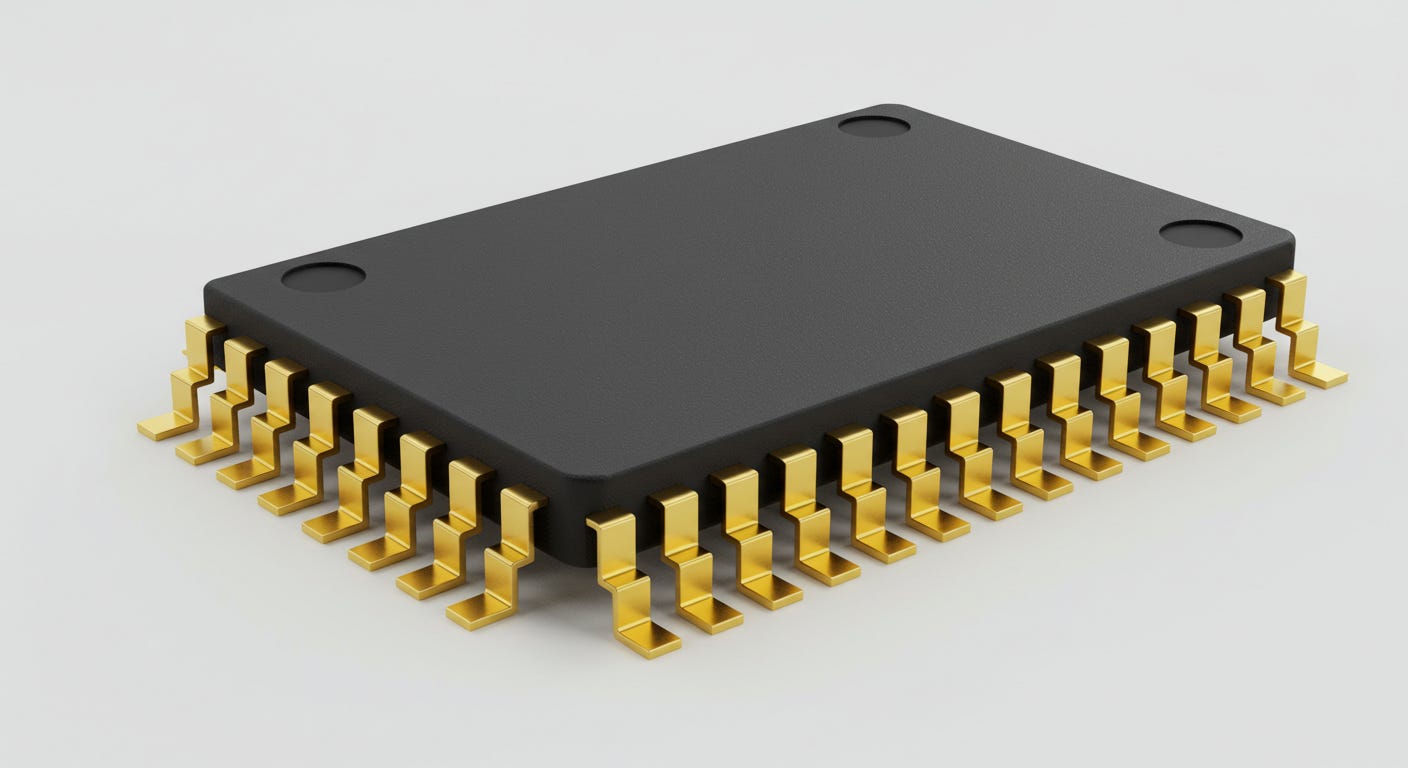
Quantum machine learning (QML) has the potential to solve complex problems across various fields, yet its practical application is constrained by challenges such as noise and limited scalability in current quantum devices. In their study titled 'Addressing the Current Challenges of Quantum Machine Learning through Multi-Chip Ensembles,' Junghoon Justin Park from Seoul National University and colleagues propose a multi-chip ensemble framework that partitions high-dimensional data across smaller chips, improving scalability and noise resilience. This approach mitigates issues like barren plateaus and reduces error bias and variance, as validated by experiments on standard datasets. The research team, including experts from Seoul National University, Wells Fargo, and Brookhaven National Laboratory, offers a promising solution for advancing QML on near-term quantum hardware.
Multi-chip VQC enhances QML on NISQ devices.
Quantum Machine Learning (QML) has emerged as a promising approach to leverage quantum computing for real-world challenges, offering potential advantages over classical methods through properties like superposition and entanglement. Applications span diverse fields, including chemistry, materials science, healthcare, sensing, and high-energy physics. However, the practical deployment of QML is constrained by the limitations of noisy intermediate-scale quantum (NISQ) devices, which face challenges such as noise, limited scalability, and trainability issues in variational quantum circuits (VQCs). These barriers are further complicated by phenomena like barren plateaus, where gradients vanish during optimization, hindering progress.
Researchers have introduced the multi-chip ensemble VQC framework to address these challenges, designed to enhance scalability, trainability, and noise resilience. This approach partitions high-dimensional data across smaller quantum chips, allowing for classical aggregation of measurements without enlarging individual chips. By controlling inter-chip entanglement, the framework mitigates barren plateaus and improves generalization through implicit regularization. Additionally, the shorter subcircuits reduce hardware noise, as errors average out across the ensemble.
The multi-chip ensemble VQC framework demonstrates strong potential for enabling scalable QML on near-term devices. While direct experiments on real quantum hardware were not feasible, the framework was validated under realistic depolarizing and amplitude-damping noise conditions, mirroring current NISQ limitations. This approach aligns with existing hardware roadmaps from leading quantum computing companies such as IBM, IonQ, and Rigetti, ensuring compatibility with both current and emerging technologies.
Theoretical and empirical validations of the multi-chip ensemble framework highlight its ability to control quantum entanglement, addressing key challenges in QML deployment. By focusing on practical solutions rather than dissecting every possible design choice, this approach provides a robust foundation for advancing QML applications. The framework’s compatibility with realistic noise conditions and its alignment with industry roadmaps underscore its potential to bridge the gap between theoretical advancements and real-world implementation.
In summary, the multi-chip ensemble VQC framework offers a modular solution to overcome NISQ-era barriers in Quantum Machine Learning. By partitioning data across smaller chips, controlling entanglement, and reducing noise sensitivity, this approach enhances scalability, trainability, and generalization. Its validation under realistic noise conditions and compatibility with existing hardware roadmaps position it as a promising avenue for advancing QML applications on near-term quantum devices.
The method splits data across chips to enhance scalability and noise resilience.
Quantum machine learning (QML) holds immense promise for solving complex problems that classical computers struggle with, yet it faces significant challenges, particularly due to noise and scalability issues inherent in current quantum computing devices. The researchers addressed these challenges by introducing a novel approach: the multi-chip ensemble Variational Quantum Circuits (VQC) framework. This method partitions data across multiple quantum chips, enhancing both scalability and noise resilience.
The framework's innovation lies in its ability to distribute computational tasks across several chips, allowing each chip to handle a portion of the problem. This distribution not only improves performance but also mitigates the effects of noise, a common issue in quantum computing. The researchers demonstrated that increasing the number of chips led to significant improvements in both training and validation performance, highlighting the method's scalability.
Key findings revealed that the framework achieved better generalization, reducing errors when applied to new data. Additionally, it showed resilience against noise, a critical factor for practical applications. Notably, the framework excelled on complex datasets like PhysioNet EEG, suggesting its potential in real-world scenarios such as medical diagnostics.
However, the study also raised important considerations. The effectiveness of data distribution methods and resource requirements remain areas needing further exploration. Understanding how different training dynamics operate within this framework is crucial for optimizing its performance.
In conclusion, the multi-chip ensemble VQC framework represents a promising advancement in QML, offering solutions to current challenges and paving the way for practical applications. By enhancing scalability and noise resilience, this approach could significantly contribute to advancing quantum computing's role in solving real-world problems.
Multi-chip framework enhances quantum machine learning scalability.
The article presents a novel approach in quantum machine learning (QML) by introducing a multi-chip ensemble Variational Quantum Circuit (VQC) framework. This method addresses key challenges posed by noisy intermediate-scale quantum (NISQ) devices, such as noise, limited scalability, and trainability issues. By partitioning high-dimensional data across smaller quantum chips, the framework enhances scalability, trainability, and noise resilience, making it a promising solution for practical QML applications.
The multi-chip ensemble VQC framework operates by distributing data across multiple quantum chips, each independently processing a portion of the dataset. This approach avoids classical dimension reduction techniques, thereby preserving the original data structure and potentially improving model performance. Each chip employs U3 gates for single-qubit operations and Ising terms to create entanglement between qubits. Conditional pooling is used to halve the number of qubits at each step, effectively mitigating barren plateaus—a phenomenon where gradients vanish during training.
Experimental results demonstrate the effectiveness of this approach across various datasets. On the FashionMNIST dataset, models utilizing more chips exhibited superior performance in terms of validation loss compared to single-chip models. Similar trends were observed on the CIFAR-10 dataset, with multi-chip configurations outperforming their single-chip counterparts. Additionally, the framework showed resilience against quantum noise, as errors were averaged out across multiple chips. The method's applicability was further validated on the PhysioNet EEG dataset, where it achieved high AUROC scores without the need for dimension reduction.
The study highlights several key insights and implications. By avoiding classical dimension reduction, the framework preserves more information from the original data, potentially leading to better performance. The use of multiple small chips is found to be more feasible with current quantum technology compared to relying on a single large chip. Furthermore, the ensemble approach demonstrates robustness against noise, as errors are mitigated through averaging across chips. These findings underscore the potential of the multi-chip ensemble VQC framework for enabling scalable QML applications on near-term quantum devices.
In conclusion, the multi-chip ensemble VQC framework effectively handles larger datasets by leveraging parallel processing and addressing quantum challenges such as noise and barren plateaus. This method offers a practical approach to advancing QML applications despite the limitations of current NISQ devices, paving the way for future innovations in quantum computing.
👉 More information
🗞 Addressing the Current Challenges of Quantum Machine Learning through Multi-Chip Ensembles
🧠 DOI: https://doi.org/10.48550/arXiv.2505.08782