
IBM Quantum Cloud Hosts 240,000 Users After 10 Years of Access
Big Big Does a Decade of Quantum Cloud

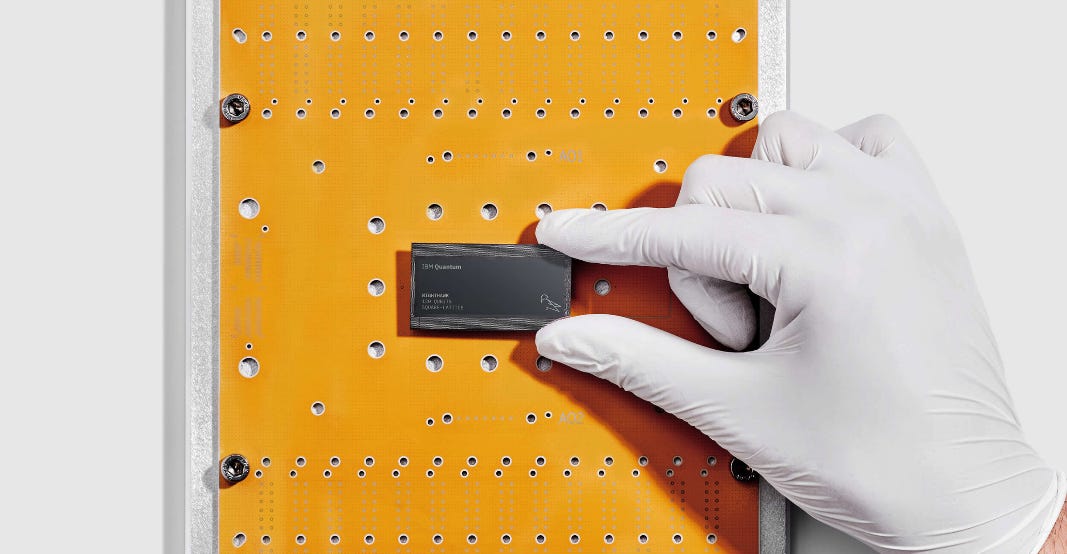
In 2016, IBM registered over 17,000 users within the first two weeks of offering cloud access to a quantum computer, demonstrating early adoption. Now, a decade later, the IBM Cloud hosts 240,000 users and supports a network of 300 ecosystem partners. This milestone was achieved not through hardware innovation alone, but through a deliberate focus on usability. According to IBM, the core technical hurdle wasn’t building the quantum computer, but calibrating it for continuous, multi-user access. “It was about building something usable and, eventually, useful,” a sentiment that drove the decision to calibrate the quantum computer once a day, anticipating a future of widespread, continuous use. This commitment has yielded 5,900 research papers and the world’s largest fleet of quantum computers.
IBM Quantum’s Decade of Firsts: Cloud Access to QPU Scaling
IBM’s entry into quantum computing a decade ago wasn’t solely about assembling qubits; it was about fundamentally reimagining access to the technology, a shift marked by placing the first quantum computer on the cloud on May 4, 2016. Prior to this, quantum workflows required calibration and experimentation to occur within the same session, a limitation IBM deliberately circumvented. The company envisioned, and ultimately implemented, a system calibrated once daily, allowing numerous users to run experiments without interruption. This decision was driven by the anticipation of a broad user base and a commitment to usability, and it fueled a series of quantum firsts extending beyond mere hardware milestones. In 2017, IBM released Qiskit, the first quantum software development kit, followed in 2018 by the establishment of the IBM Quantum Network, the first commercial ecosystem for quantum computing.
The subsequent unveiling of the IBM Quantum System One in 2019 marked the first quantum computer specifically designed for deployment, and the Poughkeepsie quantum datacenter followed shortly after. IBM continued to push boundaries, achieving a significant milestone in 2021 with the Eagle QPU, which exceeded 100 qubits. More recently, in 2023, the team demonstrated quantum utility by executing a circuit beyond the capabilities of classical simulation. This commitment to scaling is evident in the IBM Quantum System Two, the first quantum computer designed for modular expansion, and the loon QPU, designed for LDPC codes in 2025.
Currently, IBM has deployed 91 systems globally, including installations at institutions like the University of Tokyo, Cleveland Clinic, and RIKEN, with further expansions planned for Illinois and a “Quantum Valley” project. IBM’s mission is to bring useful quantum computing to the world, and the breadth of these achievements suggests a sustained trajectory toward that goal.
First QC (quantum computer) on the cloud — IBM Quantum Experience (5 qubits), 4 May 2016
First quantum SDK — Qiskit, 2017
First QC commercial ecosystem — IBM Quantum Network, 2018
First QC designed for deployment— IBM Quantum System One, 2019
First quantum developer advocate (Qiskit Advocate) program, 2019
First quantum datacenter — Poughkeepsie, 2019
First detailed multi-year quantum hardware roadmap — 2020
First QPU (Eagle) to break 100 qubits, 2021
First quantum developer certificate program, 2021
First demonstration of quantum utility — executing a quantum circuit beyond exact classical simulation, 2023
First QC designed for modular scaling — IBM Quantum System Two, 2023
Released Qiskit 1.0- the most performant quantum sdk for utility scale experiments, 2024
First QC datacenter in Europe — Ehningen, 2024
First quantum-centric supercomputing demonstrations integrating QPU + HPC, 2024
First commercial platform for application integration— enabling the quantum startup ecosystem with Qiskit Functions, 2024
First QPU (loon) designed for LDPC codes, 2025
First demonstration of utility scale dynamic circuits, 2025
Qiskit SDK and Ecosystem Growth: From 2017 to Qiskit 1.0
The current quantum computing environment is defined by a rapidly expanding ecosystem built upon accessible software and hardware. IBM has deployed 91 quantum systems globally with partners including the University of Tokyo and the Cleveland Clinic, demonstrating a shift from isolated research to distributed access. This expansion wasn’t simply about increasing qubit counts, but establishing a sustainable infrastructure for widespread experimentation, a challenge that initially overshadowed even the complexities of building the quantum processors themselves. The company recognized early on that calibrating the quantum hardware for continuous, multi-user access presented a more significant hurdle than the physical construction of the computers. “The real challenge was devising a way to calibrate our device so the system was always tuned up and ready to go whenever a user wanted to run a job,” a point that highlights a critical, often underestimated, aspect of quantum system engineering.
This forward-thinking approach manifested in a deliberate architectural decision to calibrate devices once daily, anticipating a cloud environment where numerous users would simultaneously access the hardware. The evolution culminated in the 2024 release of Qiskit 1.0, described as “the most performant quantum sdk for utility scale experiments.” This milestone wasn’t merely an incremental update; it represented a maturation of the software stack, designed to support increasingly complex and demanding quantum computations.