
China’s First Atomic Quantum Computer “Hanyuan No. 1” Goes Commercial
Will it stack up against the west's machines?

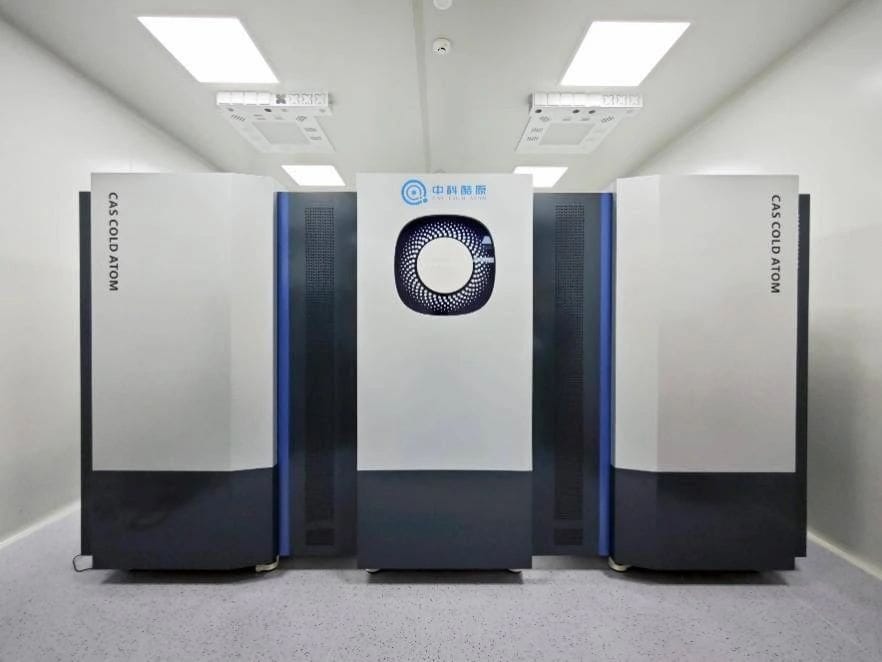
China has leapt forward in the race to build the next generation of computing power with the commercial launch of “Hanyuan No. 1,” the nation’s first atomic quantum computer. Developed through a collaborative effort led by the Chinese Academy of Sciences, this groundbreaking machine has already secured over $6 million in orders, including its first international sale. While still in its early stages, quantum computing promises to revolutionize fields from medicine and materials science to finance and artificial intelligence by tackling problems currently impossible for even the most powerful supercomputers, and this milestone signals China’s growing prominence in this fiercely competitive technological arena.
Hubei’s “Hanyuan No. 1” Commercialized
A significant milestone in quantum computing has been reached with the commercialization of “Hanyuan No. 1,” China’s first atomic quantum computer. Developed through a collaborative effort led by the Institute of Precision Measurement Science and Technology Innovation, Chinese Academy of Sciences, alongside Wuhan University and several other institutions, “Hanyuan No. 1” is now available for practical application, having already secured over 40 million yuan in orders, including its first international export. This development marks a crucial step forward for China in the intensely competitive field of quantum technology. Unlike many quantum computing systems that require substantial and cumbersome low-temperature refrigeration, “Hanyuan No. 1” utilizes cold atoms as qubits, achieving a balance between performance and practicality.
The project, supported by the Hubei Provincial Department of Science and Technology’s “Sharp Knife” Technology Research Project, builds upon research initiated in 2006, culminating in the successful creation of a fully functional quantum computer in June 2024. While the development of quantum computers, requiring potentially millions of qubits and robust error correction, is widely considered a monumental challenge—some experts liken it to the difficulty of landing on the moon—the industry is currently focused on developing Noisy Intermediate-Scale Quantum (NISQ) computers with hundreds of qubits for immediate industrial applications. The commercialization of “Hanyuan No. 1” signals China’s entry into this new era, demonstrating both technological prowess and engineering capability in the rapidly evolving landscape of quantum computing.
This advancement is particularly crucial for fields demanding immense processing power, positioning quantum computing as a vital technology for the next generation of information processing. The development of “Hanyuan No. 1” – achieved after nearly two decades of research beginning in 2006 – demonstrates China’s commitment to overcoming the considerable challenges inherent in quantum computer development, a task some experts deem more difficult than lunar exploration. Notably, the computer utilizes cold atoms as qubits, achieving a balance between technological advancement and practical application by reducing reliance on bulky, low-temperature refrigeration systems. The recent surge in commercial interest, evidenced by over 40 million yuan in orders including the first overseas export, signals a new era for China’s atomic quantum computing industry and underscores the growing global demand for this transformative technology.
Research Enables Advancement
The commercialization of “Hanyuan No. 1,” China’s first atomic quantum computer, marks a significant leap forward in quantum computing, a development directly fueled by years of dedicated research and strategic investment. This groundbreaking achievement, reported by Hubei Daily, isn’t a sudden breakthrough, but the culmination of a research program initiated by the Institute of Precision Measurement Science and Technology Innovation, Chinese Academy of Sciences, back in 2006. Leading multiple major national scientific and technological projects, the team meticulously built foundational technologies in atomic qubit coherent control and high-precision detection – expertise considered essential, yet extraordinarily difficult to attain, in the pursuit of viable quantum computation.
Experts have likened the challenges of developing quantum computers to landing on the moon, highlighting the lengthy research and development cycles involved. The project gained further momentum through the provincial “Sharp Knife” Technology Research Project, which provided crucial support for the research and application of atomic quantum computers. This sustained commitment allowed the team, in collaboration with Wuhan University and several other institutions, to successfully develop “Hanyuan No. 1” in June 2024. The computer’s innovative use of cold atoms as qubits represents a practical advancement over systems reliant on extensive low-temperature refrigeration, demonstrating a balance between cutting-edge technology and real-world applicability. The recent receipt of over 40 million yuan in orders, including the first overseas export, underscores the commercial viability of this long-term research investment and signals China’s entrance into a new era of quantum computing commercialization.