
AI Designed Peptides Emerge From Hybrid Quantum-Classical Design

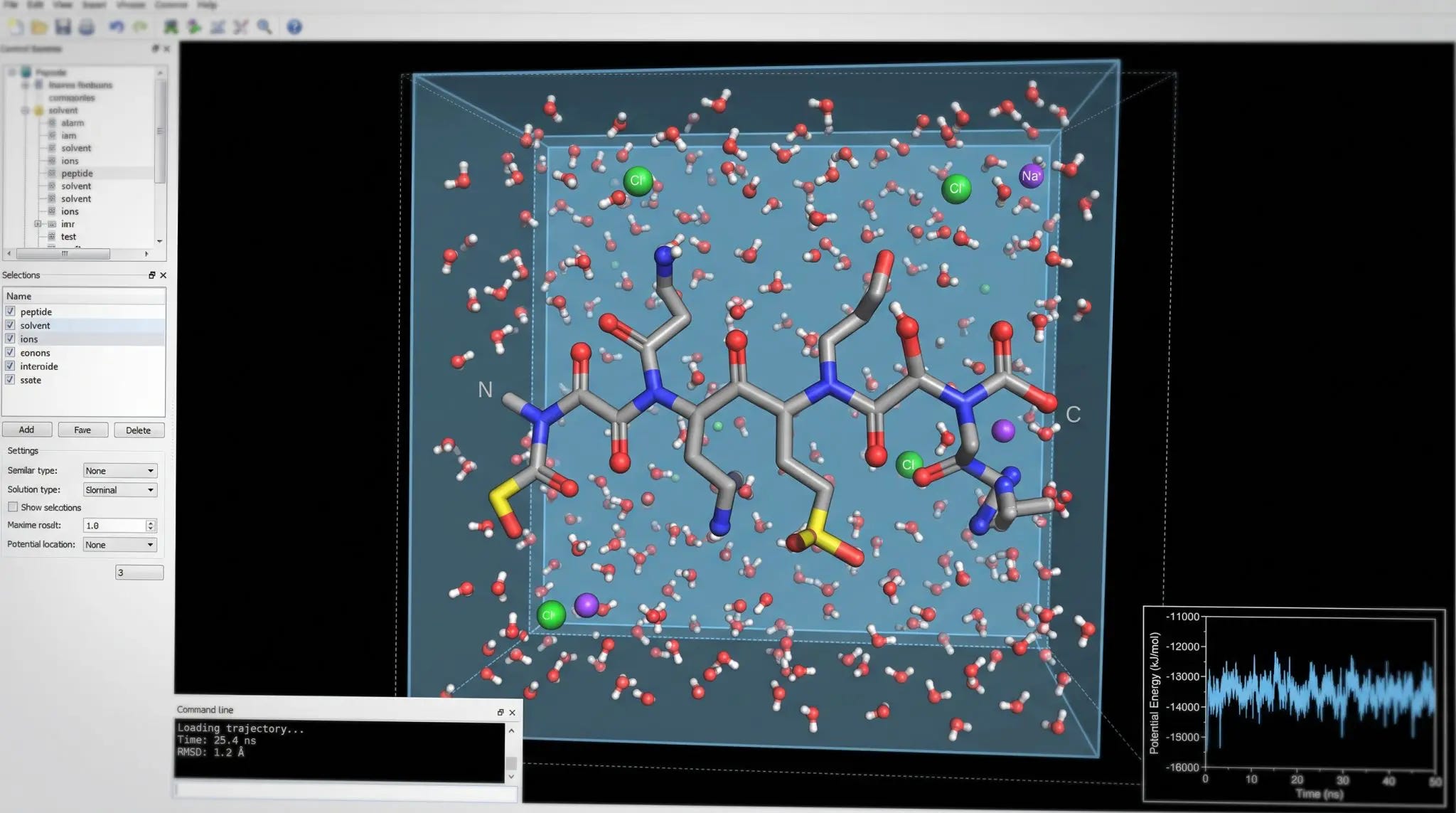
Researchers from eight institutions across Denmark, the UK, and Poland have combined quantum computing with classical methods to design peptides capable of binding to major histocompatibility complex (MHC) class I molecules, a critical step in initiating immune responses. The team reports demonstrating a hybrid approach to de novo peptide design, addressing a key challenge in both vaccine development and T-cell therapies where identifying effective peptide candidates remains difficult, particularly for less-studied alleles. This work focuses on complex sequence spaces, exemplified by the HLA-A*31:01 allele linked to severe drug reactions, where limited training data hinders traditional computational methods. By leveraging photonic quantum processors and sampling from high-dimensional distributions, the researchers aim to broaden the exploration of potential peptide designs and overcome limitations of classical generative models.
This collaborative study on quantum-enhanced generative peptide design was conducted by a multidisciplinary consortium of academic institutions and quantum computing industry partners. Researchers from the Technical University of Denmark (spanning the Departments of Biotechnology and Biomedicine, Health Technology, the Center for Translational Protein Design, and DTU BRIGHT) led the biological design, data science, and in vitro validation of the MHC-binding peptides. They partnered with quantum technology experts at ORCA Computing and Sparrow Quantum to develop and run the hybrid quantum-classical pipeline using real photonic quantum hardware. Additional critical computational infrastructure, algorithm scaling, and structural biology expertise were provided by the MRC Laboratory of Molecular Biology in the UK, the Poznan Supercomputing and Networking Center, and the Poznan University of Technology in Poland.
Only a small fraction of potential peptide sequences effectively bind to MHC, and accurately predicting these interactions, especially for less-studied alleles, remains difficult. The researchers specifically targeted HLA-A*31:01, an allele linked to severe drug reactions, as a test case for their novel method. As the team explains, “Generating novel binders for such alleles therefore provides a useful test case for novel methods that aim to navigate these complex sequence spaces where training data is biologically bottlenecked.” Their pipeline integrates a generative adversarial network (GAN) with latent vectors sourced from a real photonic quantum processor. This approach aims to leverage the unique properties of quantum-derived probability distributions to explore the vast landscape of possible peptide sequences. The researchers reasoned that incorporating a quantum-derived prior distribution into a peptide generative model could systematically influence how allele-specific sequence spaces are explored, independent of model architecture or training objective. The generated peptides were then validated in vitro using peptide-MHC stability ELISA for three understudied alleles, providing experimental confirmation of the computational designs.
The pursuit of predictive models for MHC-binding peptides is currently focused on expanding datasets and refining computational techniques, yet significant challenges remain in accurately forecasting presentation by specific HLA alleles. Researchers are increasingly recognizing that the statistical mapping between amino acid sequence and antigen presentation is far from uniform, exhibiting allele-specific nuances and nonlinear complexities. This is particularly true for alleles like HLA-A*31:01, which, despite its relative rarity in European populations, is demonstrably linked to severe T-cell mediated adverse drug reactions, necessitating a detailed understanding of its peptide presentation profile. Instead of solely focusing on model architecture, the researchers explored the impact of the prior distribution used in a generative adversarial network (GAN).
The approach centers on a generative adversarial network (GAN) conditioned on latent vectors sampled from a photonic quantum processor. The pipeline, trained on a dataset of approximately 77,000 unique sequences encompassing 126 distinct MHC class I molecules a), aims to generate diverse candidates for 131 HLA alleles. The team specifically sought to isolate the effect of the quantum-derived prior, stating their aim was to test “whether structured, non-classical prior distributions obtained from quantum processors could shape peptide generation in ways relevant to MHC class I ligand discovery.” Initial in vitro validation using peptide-MHC stability ELISA is underway for three understudied alleles, assessing the potential of this hybrid quantum-classical approach to overcome limitations in sparse data regimes.
The development of effective vaccines and T-cell therapies received a boost from an unexpected source: quantum computing. This intersection of fields is particularly noteworthy given the current surge in quantum computing applications across diverse scientific domains.
Conventional generative models often rely on simple, classical distributions as a starting point for creating new data, but researchers are now investigating whether the unique properties of quantum mechanics can offer an advantage in designing complex biological sequences. Specifically, the researchers utilized photonic quantum processors to generate latent vectors, the initial input for their generative adversarial network (GAN), sampling from high-dimensional, correlated probability distributions difficult to replicate classically. They explain that “Photonic quantum processors effectively sample from high-dimensional, strongly correlated probability distributions that are not efficiently reproducible by classical algorithms,” suggesting a potential for increased diversity in design tasks.
The team focused on generating peptides that effectively interact with MHC class I, a process vital for both vaccine development and T-cell therapies. This pipeline was trained on a dataset of approximately 77,000 validated peptide ligands, allowing the model to learn allele-specific constraints.
While current predictive models demonstrate strong performance across many human leukocyte antigen (HLA) alleles, generating diverse and allele-specific peptide candidates remains a significant hurdle, particularly when dealing with limited training data. Researchers are increasingly focused on understudied alleles like HLA-A*31:01, linked to severe drug reactions, highlighting the need for precise mapping of their peptide presentation landscapes. To facilitate advancements in this area, the team leveraged the curated ligand dataset assembled for NetMHCpan-4.1, aggregating over approximately 77,000 mass spectrometry-validated, naturally presented HLA class I ligands from the Immune Epitope Database. This extensive resource was restricted to 9-mers, the most common length of MHC class I ligands, allowing researchers to isolate the impact of the prior distribution on peptide generation. The dataset, encompassing 126 distinct MHC class I molecules a), served as both the training data and the conditioning labels for a generative model.
This intersection of fields is particularly timely given the escalating interest in practical applications for quantum computing. The team’s work, detailed in a recent bioRxiv preprint, centers on overcoming limitations in de novo peptide generation, especially when dealing with alleles where training data is scarce. Crucially, the team aimed to isolate the effect of the prior by utilizing a conditional GAN framework, allowing them to modify the prior distribution without altering other aspects of the model.
The successful computational design of novel peptide ligands hinges on real-world confirmation; therefore, the team rigorously tested their designs using a peptide-MHC stability ELISA. This biochemical assay directly measures how strongly a generated peptide binds to its target MHC class I molecule, providing crucial validation beyond purely computational predictions. While the team acknowledges the conditional GAN framework isn’t currently state-of-the-art, its simplicity allowed focused evaluation of the prior’s impact.
Source: https://www.biorxiv.org/content/10.64898/2026.07.09.736951v1.full.pdf